Child development stages: birth to five
A complete guide to child development from birth to five: typical milestones by age, the areas of learning behind them, the progress check at two, and when to seek support.
7 min read
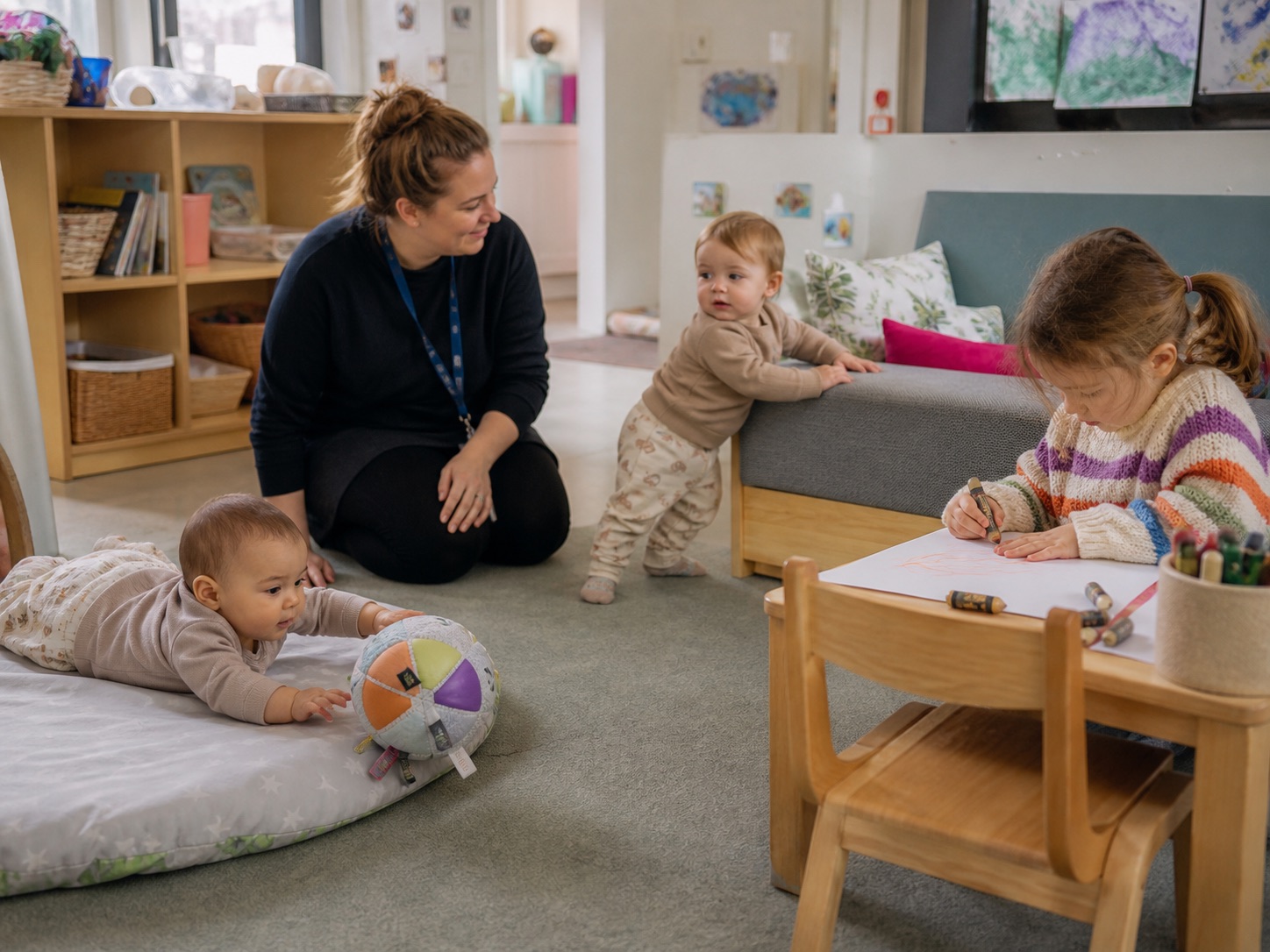
Children change more in their first five years than at any other point in their lives. Knowing roughly what to expect at each stage helps you offer the right experiences at the right time, notice when a child might need extra help, and talk to parents with confidence.
Before any of the detail below, one principle sits over all of it: every child develops at their own pace. The stages that follow describe what is typical, not a timetable a child is passing or failing. Two children the same age can be months apart on any given skill and both be developing perfectly well. Use these stages to inform what you notice and provide — never to rank children.
This guide covers the five broad stages from birth to five, the areas of learning that run through all of them, the statutory progress check at age two, and the signs that mean it is worth seeking advice.
The five stages at a glance
- Birth to 1 year — learning through senses and relationships; gaining head control, sitting, reaching; babbling and first words.
- 1 to 2 years — walking and climbing; first words becoming many; parallel play and big feelings.
- 2 to 3 years — language accelerating; short sentences; growing independence and the age of the progress check at two.
- 3 to 4 years — imaginative, social play; longer conversations; endless "why?" questions.
- 4 to 5 years (reception) — cooperative play, early reading, writing and number, building towards the Early Learning Goals.
How development actually works
Development is not a single ladder. It happens across several strands at once, and the strands feed each other — a child who is talking more is often negotiating play more, too. In the Early Years Foundation Stage (EYFS) these strands are grouped into seven areas of learning, and three of them are called prime areas because they underpin everything else:
- Communication and language
- Personal, social and emotional development
- Physical development
The four specific areas — literacy, mathematics, understanding the world, and expressive arts and design — grow out of those foundations as children get older. For a fuller explanation of how the areas fit together, see our guide to what Development Matters is.
A note on structure: Development Matters itself does not use year-by-year bands. It groups children into three broad, overlapping phases — birth to three, three and four-year-olds, and children in reception — with "observation checkpoints" along the way. Each of those has its own detailed guide. The finer stages below are simply a more detailed way to talk about typical development; they sit inside those phases rather than replacing them.
It is also worth remembering that development is about how children learn, not only what they can do. The EYFS calls these the Characteristics of Effective Teaching and Learning: playing and exploring, active learning, and creating and thinking critically. A curious, persistent two-year-old is developing something as important as any single skill.
Birth to 1 year
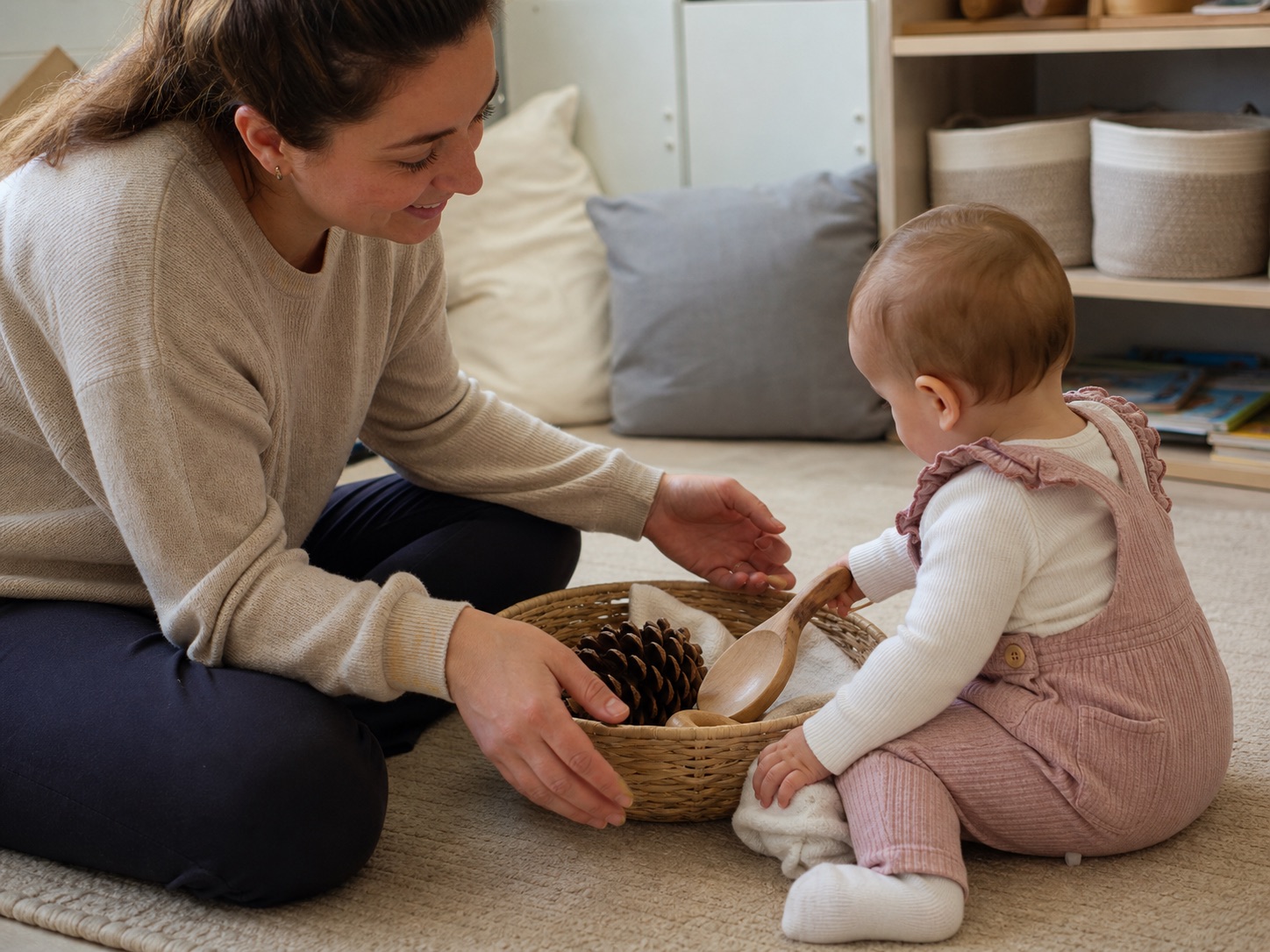
In the first year, babies learn through their senses and, above all, through relationships. Warm, responsive care is the curriculum: being talked to, held, and answered is how the foundations for communication and confidence are laid.
- Communication and language: coos and babbles, turns to familiar voices, takes turns in "conversations" of sound, and may say a first word around their first birthday.
- Physical development: gains head control, rolls, sits, reaches for and grasps objects, and often begins crawling and pulling to stand.
- Personal, social and emotional: forms strong attachments to key people, seeks comfort when upset, smiles socially, and becomes wary of strangers.
How to support it: talk and sing through everyday routines, offer plenty of tummy time and safe space to move, provide interesting real objects to explore, and — most of all — protect a consistent key-person relationship.
1 to 2 years
Movement opens the world up, and language begins in earnest. Toddlers understand far more than they can say.
- Communication and language: follows simple instructions, points to share interest, and builds a vocabulary of single words, with some two-word phrases emerging by around two.
- Physical development: walks, climbs, begins to run, feeds themselves with a spoon, and scribbles or builds small towers.
- Personal, social and emotional: shows a growing sense of self, may become anxious when separated from a key adult, plays alongside other children (parallel play), and has big feelings that are hard to manage.
How to support it: name objects and actions constantly, offer simple real choices, give safe opportunities to climb and carry, and stay calm and consistent through the big feelings. This is also when schemas — repeated patterns of play like transporting or enveloping — often appear.
2 to 3 years
Language frequently accelerates, and with it comes a stronger sense of self, ownership, and emotion. This is the age of the statutory progress check at two.
- Communication and language: vocabulary grows quickly, sentences reach two to four words, and children begin asking questions.
- Physical development: runs, jumps, kicks a ball, climbs stairs, uses cutlery, and manages more fine-motor tasks like threading; toilet training often begins.
- Personal, social and emotional: a strong sense of "mine", the first cooperative play, a drive for independence, and tantrums as self-regulation slowly develops.
How to support it: acknowledge and name feelings ("you're cross because…"), model turn-taking, offer genuine choices, and extend what children say by adding a word or two to their phrases.
3 to 4 years
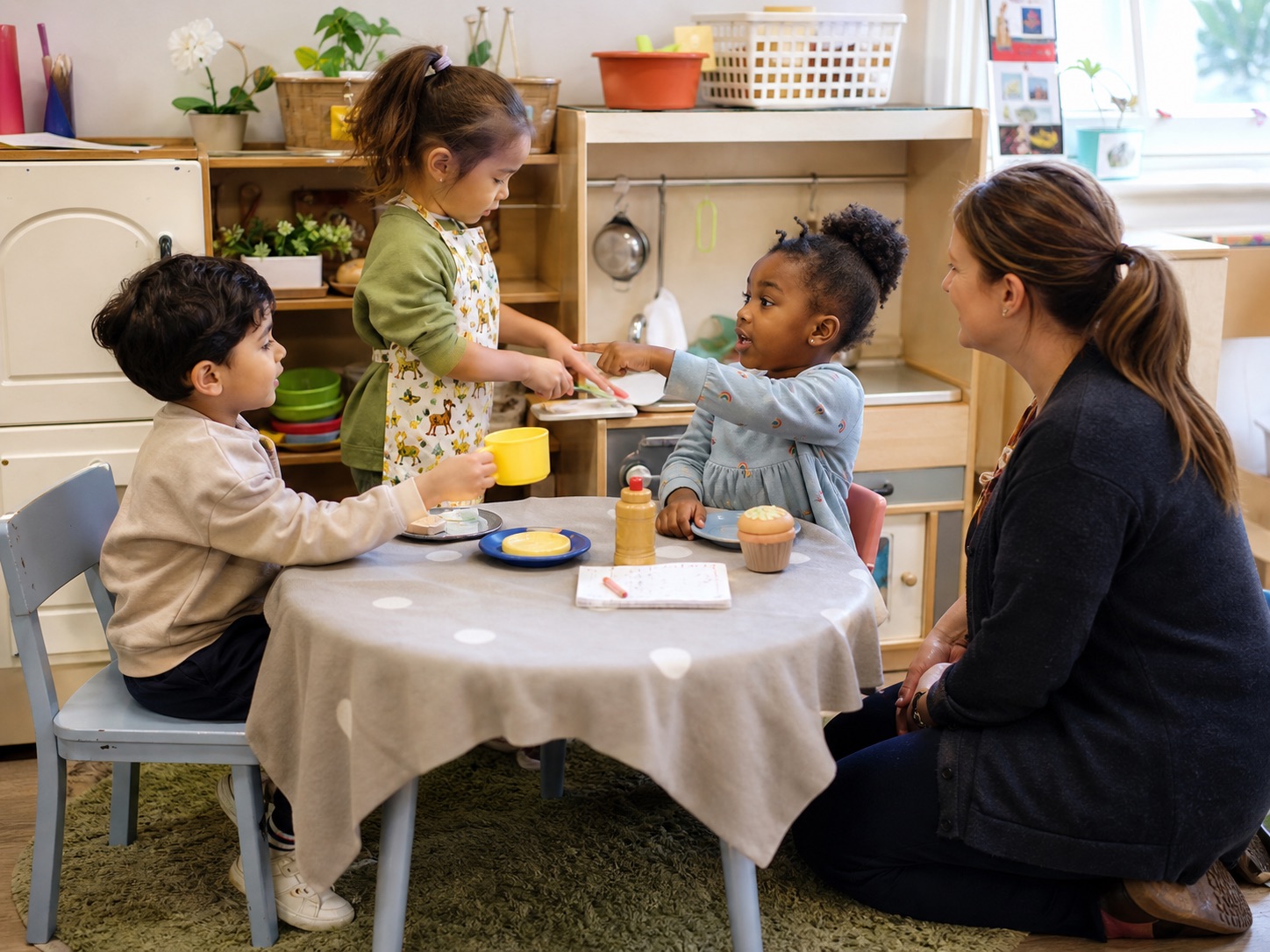
Play becomes social and imaginative, and thinking becomes visible in conversation.
- Communication and language: longer sentences, storytelling, endless "why?" questions, and enjoyment of rhymes and songs.
- Physical development: pedals a tricycle, hops, catches a ball, uses scissors, draws recognisable shapes and people, and dresses more independently.
- Personal, social and emotional: cooperative and imaginative play with others, first real friendships, negotiating roles, and growing empathy.
How to support it: ask open-ended questions, join their play to extend thinking (sometimes called sustained shared thinking), provide rich role-play, and create everyday problems worth solving together.
4 to 5 years (the reception year)
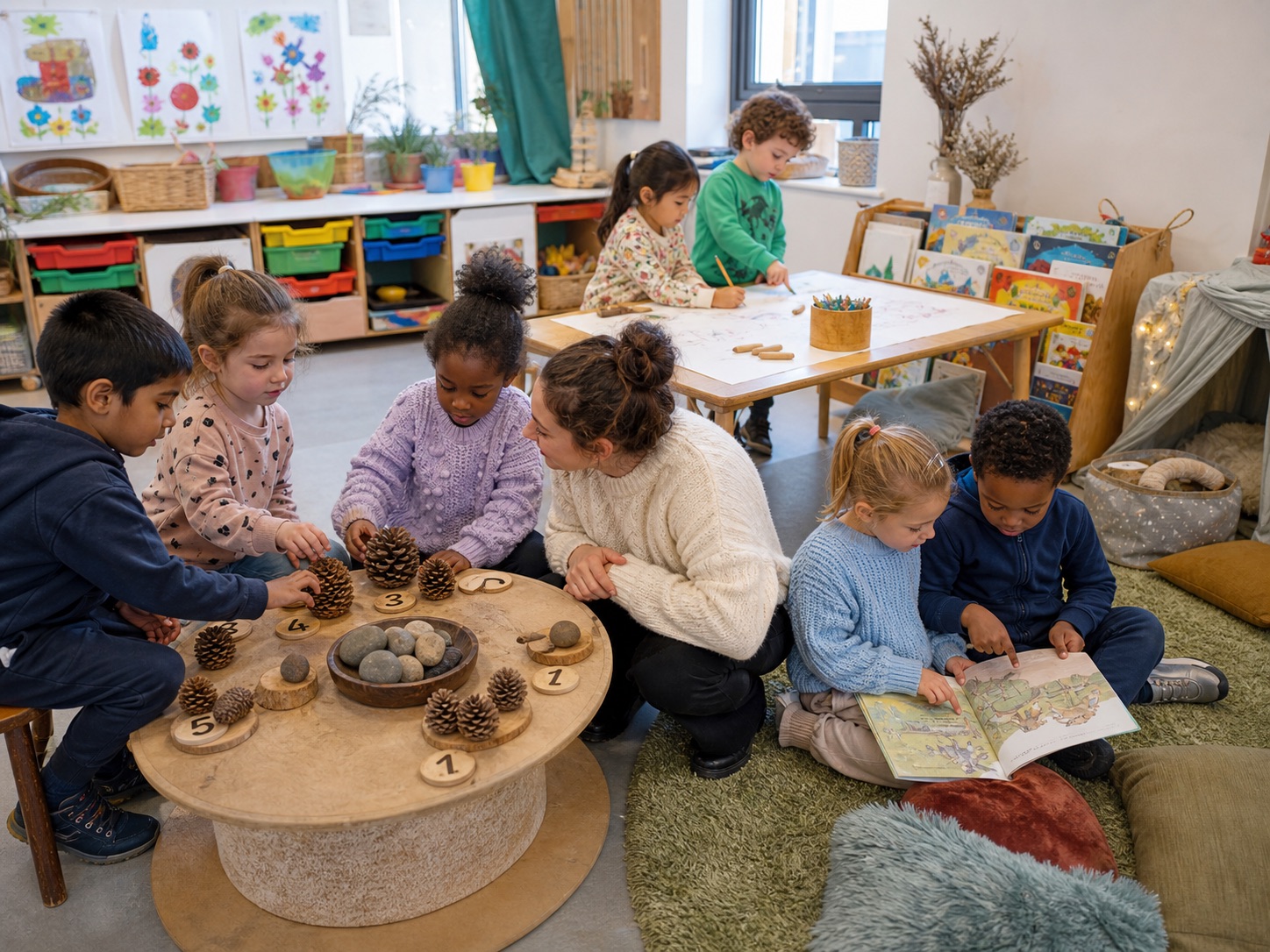
In reception, children build on everything so far towards the Early Learning Goals, which are assessed at the end of the year.
- Communication and language: fluent conversation, using past and future tense, retelling events, and developing the phonological awareness — rhyme, initial sounds — that underpins early reading.
- Physical development: confident gross-motor skills like skipping and balancing, refined fine-motor control for forming letters, and independent self-care.
- Personal, social and emotional: working and playing cooperatively, managing feelings and behaviour more independently, showing resilience, and understanding rules and fairness.
How to support it: keep talk rich, make literacy and maths playful and purposeful, offer real problems to solve, and give transition to school the attention it deserves.
The progress check at age two
Between a child's second and third birthdays, the EYFS requires settings to carry out a short written progress check at age two. It summarises a child's development in the three prime areas and is shared with parents. Its purpose is not to grade the child but to give an early, shared picture — and, where needed, to flag that a child might benefit from extra support while that support is most effective.
When to seek extra support
Because development varies so widely, a child being "behind" a typical stage is usually well within the normal range. But some signs are worth acting on promptly rather than waiting to see. Consider seeking advice if a child:
- does not respond to sounds or to their own name;
- has not started to use any words by around 18 months, or two-word phrases by around two;
- appears to lose skills they previously had;
- shows little interest in interacting with familiar people;
- is not walking by around 18 months.
None of these confirms anything on its own — they are reasons to look more closely, not diagnoses. Trust your professional instincts and the family's, and act early: talk to your setting's SENCO and, with the parents, to a health visitor or GP. Early support is almost always easier and more effective than waiting.
Turning stages into practice
Knowing the stages is only useful if it changes what you notice. The skill is seeing the development in an ordinary moment — a toddler filling and emptying a cup, a four-year-old negotiating a role in a game — and recording it in a way you can build on. Our guides on writing observations and what makes a good one pick up exactly there.
This guide is general information, not a diagnostic tool. For any concern about an individual child, seek advice from a qualified professional.
Common questions
- What are the five stages of child development from birth to five?
- Broadly: birth to one, one to two, two to three, three to four, and four to five. They are a helpful way to organise expectations, but the boundaries are soft — children move through them at their own pace.
- Which stage of child development is the most important?
- None in isolation. Development is cumulative: the relationships and communication of the earliest years lay the foundations that later learning is built on, which is why the prime areas matter so much throughout.
- Do all children develop at the same rate?
- No. Wide variation is normal, and a child can be ahead in one area and taking longer in another. Compare a child to their own earlier development, not to the class.
- How do these child development stages relate to the EYFS?
- The stages describe typical development; the EYFS is the statutory framework that sets out what settings must provide and assess. Development Matters is the guidance that connects the two.