How to write an EYFS observation
A practical walkthrough — from a scruffy note to a finished observation with a framework link and a next step, with a worked example.
3 min read
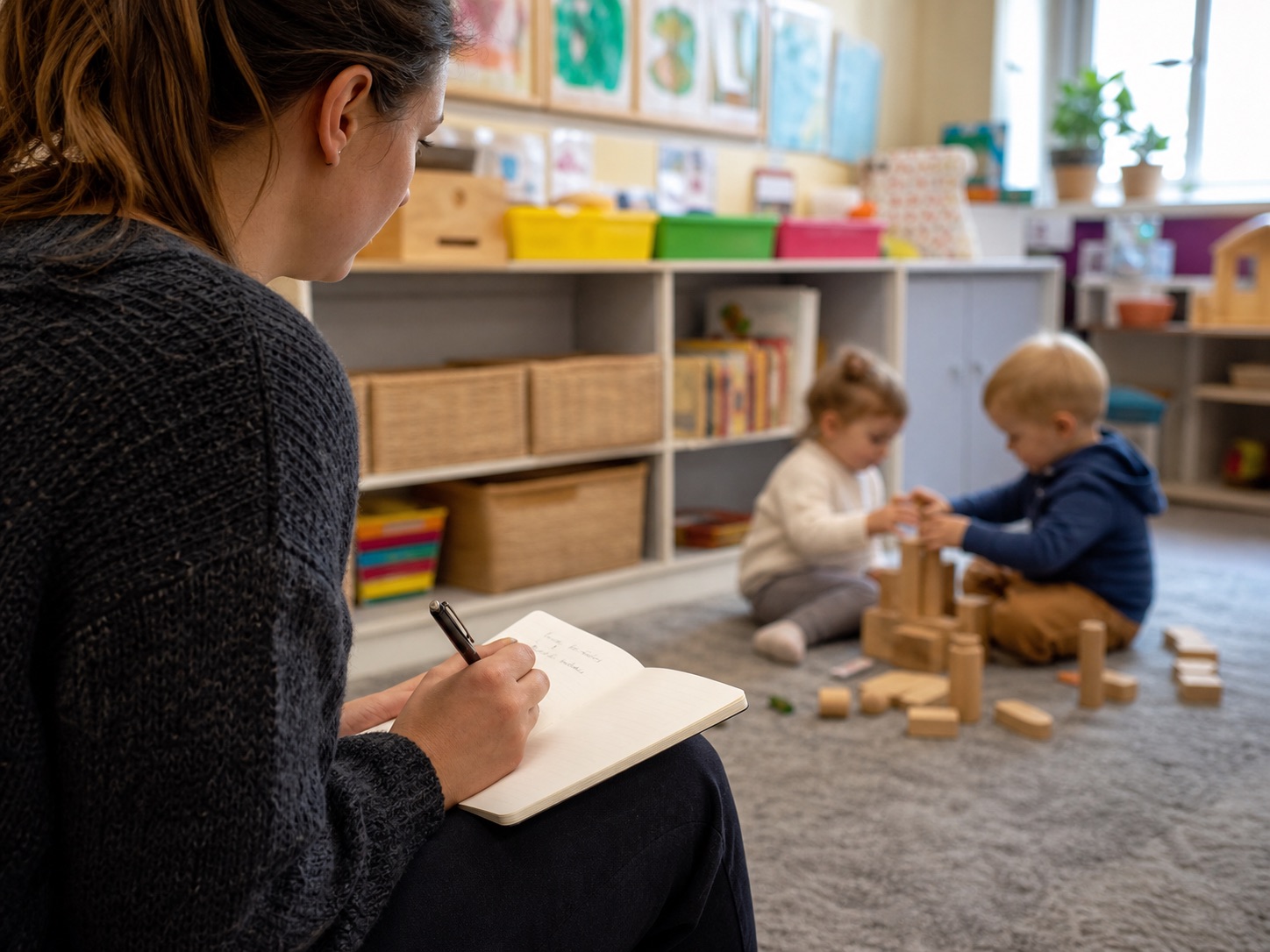
An observation is simply a record of what a child did, written down so it can be built on. It does not need to be long, and it does not need to be beautiful — it needs to be specific, accurate and useful to the next person who reads it.
This guide walks through the four steps that turn a moment you noticed into a written observation you can act on.
Start with what you actually saw
Write the note in the moment, or as soon after as you can, before the detail fades. Stick to what happened — the actions, the words, the choices the child made:
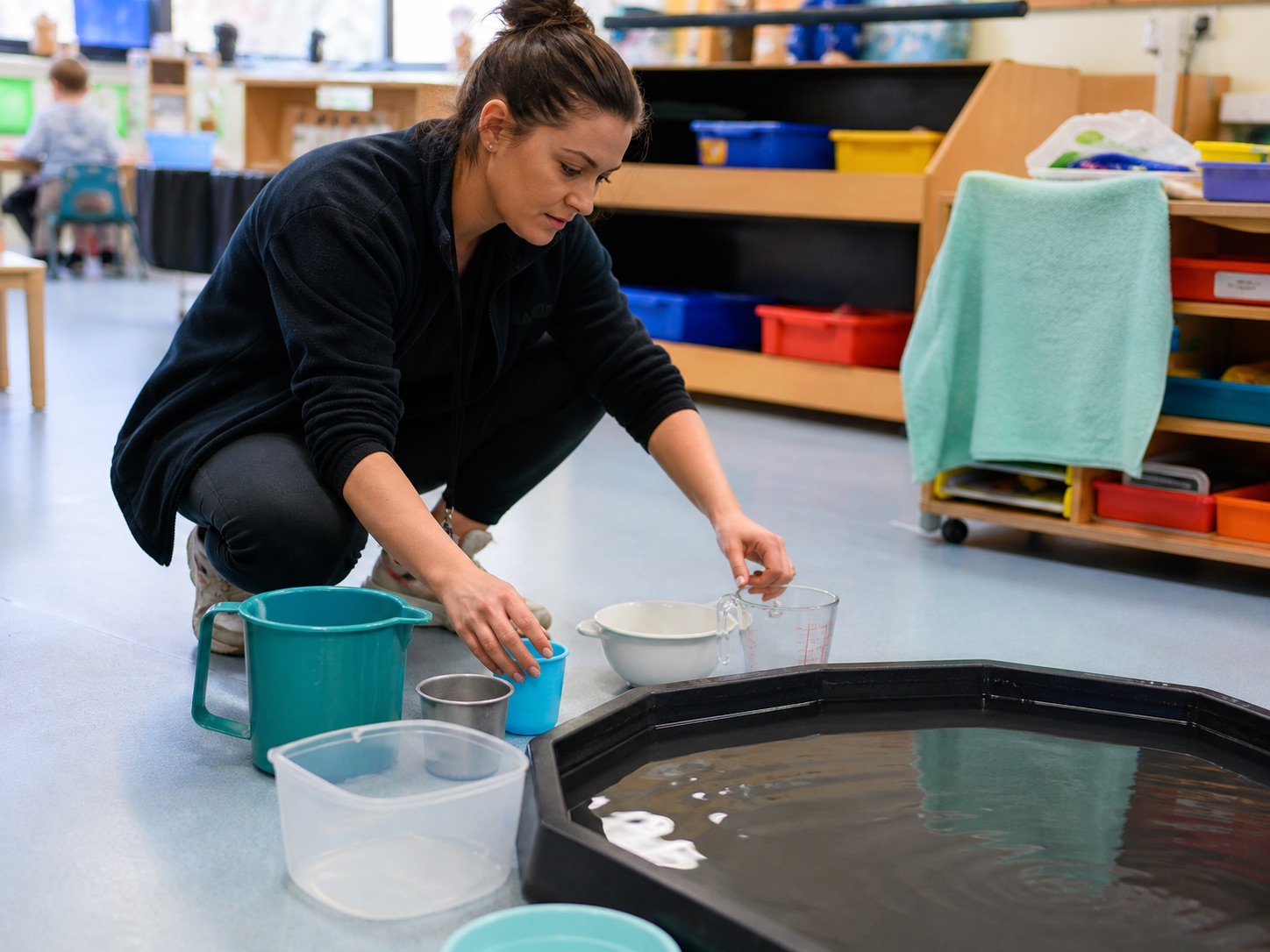
Aria spent ten minutes at the water tray, filling a jug and pouring it into a narrow bottle. When it overflowed she stopped, looked at the bottle, and reached for a funnel without being prompted.
That is enough. Notice how it records behaviour, not judgement — it does not yet say what it "shows" or "means". That comes next.
Say what it tells you about the child's learning
Now interpret it, briefly. What does this moment suggest the child is understanding or attempting? Keep it grounded in the note — if you cannot point to the words that justify a claim, do not make it.
Here, Aria noticed a problem (the overflow), paused, and chose a tool to solve it. That is problem-solving and persistence — and reaching for the funnel unprompted is worth naming.
Link it to the framework — and quote your evidence
This is where a good observation earns its keep. A framework link is only meaningful if the moment actually supports it. Choose the statement that fits what you saw, and quote the phrase from your own note that justifies it — so anyone reading can see why the link is there.
Avoid the common trap of padding a thin note to reach for a statement it does not support. A short, honest observation is worth more than a long one that claims things that did not happen.
Finish with a next step — when one is worth recording
A next step turns the record into a plan. When you write one, it should be small, specific and achievable — something you could set up tomorrow:
Offer containers of different shapes at the water tray, and add a few she has to squeeze, to extend the problem-solving she started here.
One important caveat, straight from Development Matters: you do not need a written next step on every observation. The guidance is explicit that you "can use your professional knowledge to help children make progress without needing to record lots of next steps." Often the best next step is simply what you do or say next, in the moment. Record one when it genuinely helps you or a colleague plan — not to fill a box. Our guide on writing meaningful next steps goes deeper.
What good looks like
- It is specific — a reader can picture what happened.
- The framework link is justified by the child's own actions.
- The next step follows from the observation, not from a topic plan.
- It is as long as it needs to be, and no longer.
Writing observations well is a skill, and it takes time — time most practitioners would rather spend with the children. If the writing-up is the part that eats your week, that is exactly the problem Obsly was built to take off your plate.