Birth to three: child development in the EYFS
How children typically develop from birth to three across the seven areas of learning, the Development Matters observation checkpoints, how to support them, and when to seek help.
4 min read
Development Matters groups the youngest children into a single broad phase, "Birth to 3". It is the widest of the framework's three phases for a reason: children change enormously in these years, and they do it at very different rates. As with every stage, treat what follows as typical development, not a timetable — the range of normal at this age is huge.
What unites the whole phase is that development is built on relationships and communication. Development Matters puts it plainly: "Babies, toddlers and young children thrive when they are loved and well cared for." Everything else grows from that foundation.
Birth to three at a glance
- The prime areas lead. Communication and language, personal, social and emotional development, and physical development do most of the work at this age.
- Language depends on interaction. The quantity and quality of everyday talk is the single biggest lever.
- Movement opens up learning. As babies gain control of their bodies, they gain access to the world.
- The specific areas are emerging, woven through play rather than taught.
The prime areas
Communication and language
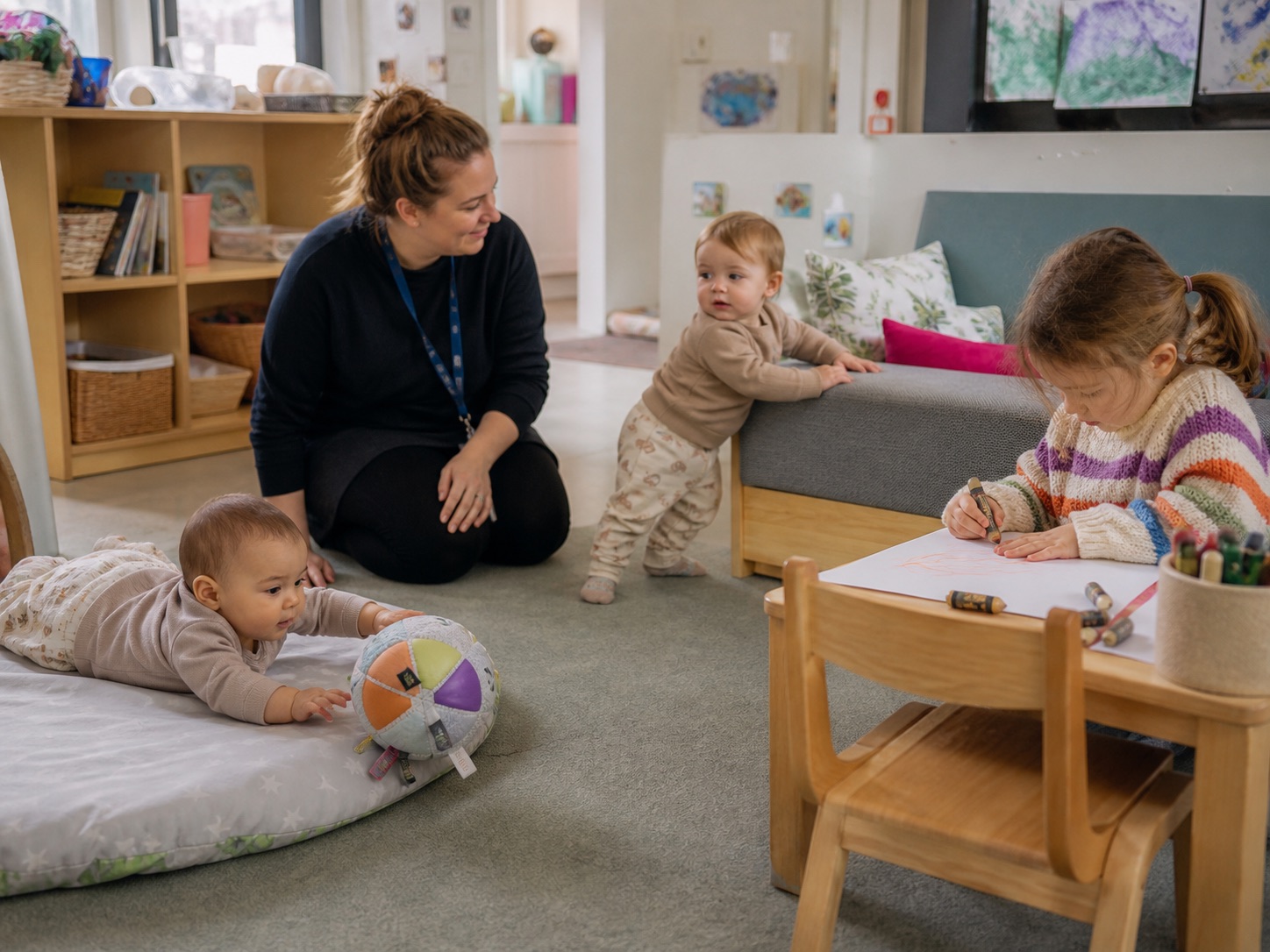
Children move from responding to familiar voices and taking turns in babbled "conversations", to single words and pointing, to combining two and three words by around their third birthday. Understanding runs ahead of speech throughout.
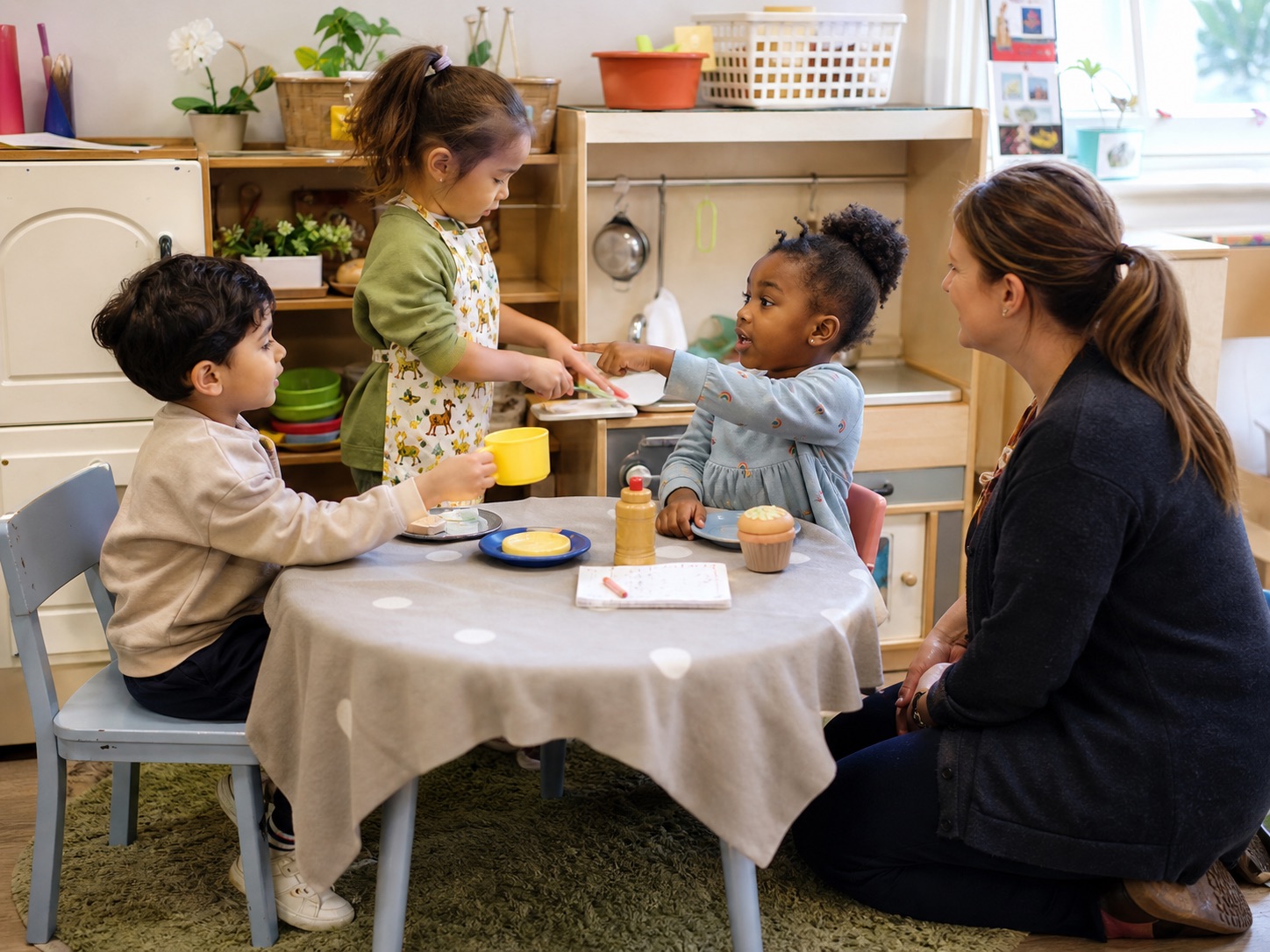
Development Matters is clear about what drives this: "the number and quality of the conversations they have with adults and peers throughout the day in a language-rich environment is crucial." Talk is the curriculum here.
Personal, social and emotional development
This is the age of attachment. A secure relationship with a consistent key person is what allows a baby or toddler to explore, because they have a safe base to return to. Across the phase children develop a sense of self, begin to express and (slowly) manage strong feelings, and start to show independence — often alongside the frustration that independence brings.
Physical development
Babies progress through the familiar sequence — lifting the head, rolling, sitting, crawling, pulling to stand, walking — and on to climbing and running. Alongside this, they refine grasping, hand-eye coordination and self-feeding. Development Matters frames physical play as building "core strength, stability, balance, spatial awareness, coordination and agility", indoors and out.
The specific areas
At this age the specific areas are lightly present, lived through play rather than taught directly:
- Literacy: enjoying songs and rhymes, sharing books with a familiar adult, noticing print in the environment, and making marks that carry meaning.
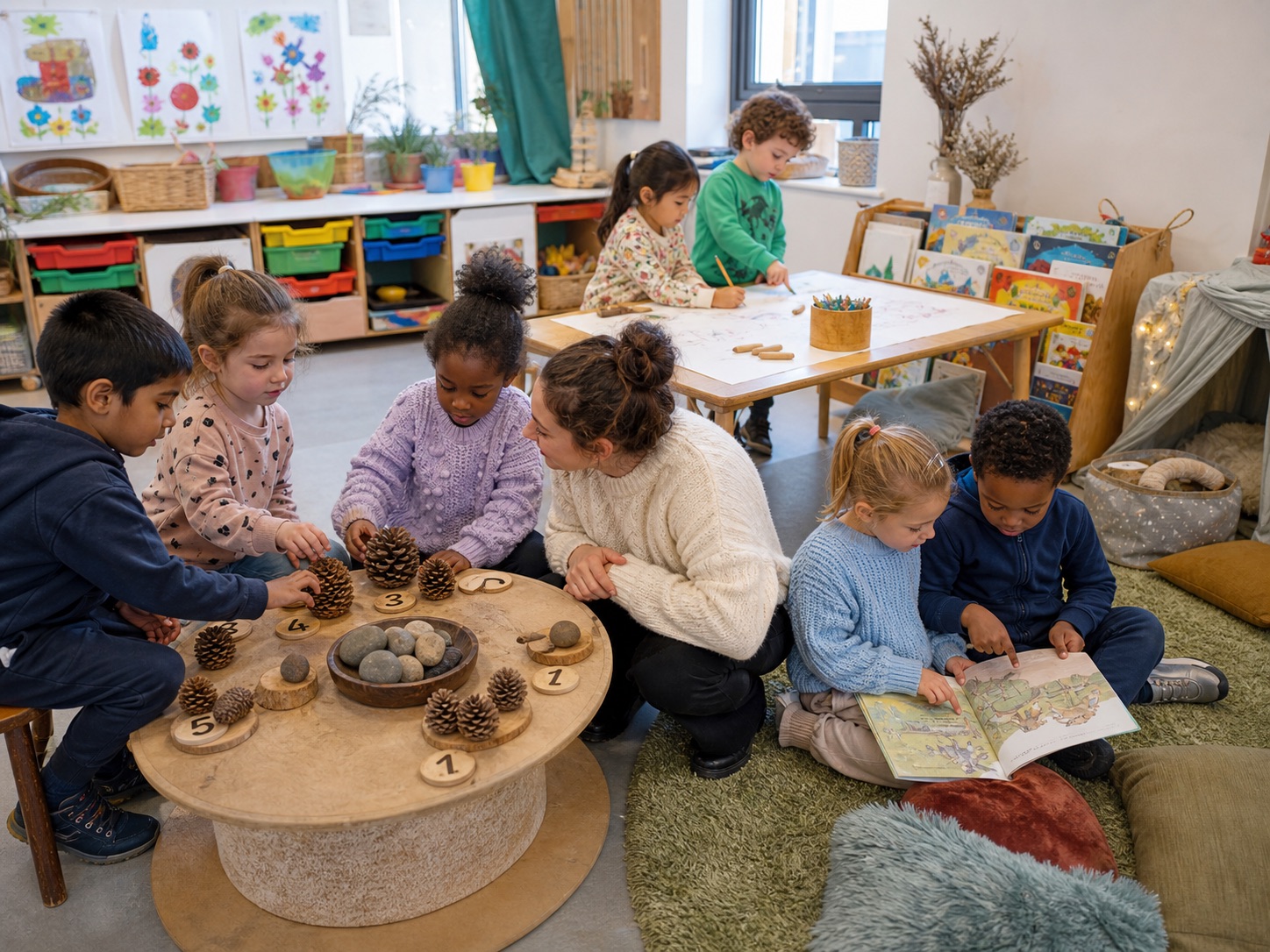
- Mathematics: noticing "more", filling and emptying containers, and beginning to see pattern and repetition in play and routines.
- Understanding the world: exploring with all the senses, and getting to know familiar people, places and the effects of their own actions.
- Expressive arts and design: exploring sound, music and movement, early mark-making, and the first flickers of pretend play.
Observation checkpoints
Development Matters includes observation checkpoints through this phase — at roughly 6 months, 12 months, 15–18 months, 2 years and around 3. They prompt you to notice, for example, whether a child is using around ten words by 18 months, combining words by two, or linking up to five words by three.
These are not pass/fail lines. In the document's terms they help you "notice whether a child is at risk of falling behind" — a prompt to look more closely and, where needed, start support early.
How to support development at this age
- Protect a consistent key-person relationship above all else.
- Talk and sing through everyday routines — narrate, name, and leave space for the child to respond.
- Offer plenty of floor time and safe space to move, indoors and outdoors.
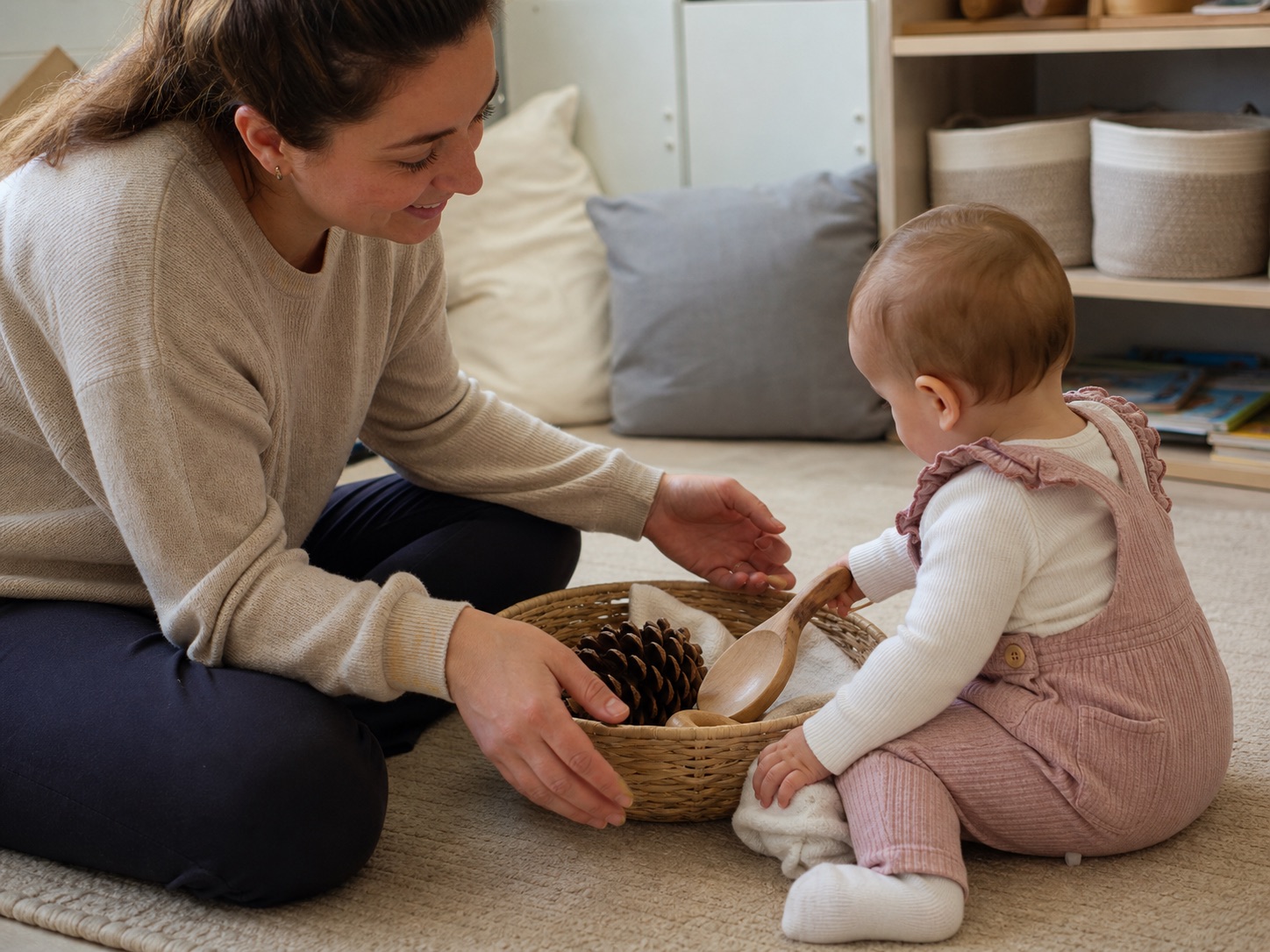
- Provide real, interesting objects to explore with the senses rather than a screen or a battery.
- Keep routines consistent so the world feels predictable and safe.
When to seek extra support
Wide variation is normal at this age, so a child being a little behind a typical point is usually nothing to worry about. But some signs are worth acting on rather than waiting. Consider seeking advice if a child:
- does not respond to sounds or to their own name;
- is not using any words by around 18 months;
- appears to lose skills they previously had;
- shows little interest in interacting with familiar people;
- is not walking by around 18 months.
None of these confirms anything on its own. Trust your professional judgement and the family's, and act early — talk to your setting's SENCO and, with the parents, to a health visitor or GP.
Where this fits
Birth to three is the first of the three Development Matters phases. Next comes three and four-year-olds. For the bigger picture see our child development overview and what Development Matters is.
This guide is general information, not a diagnostic tool. Quotations are from Development Matters (Department for Education, updated 4 September 2023), Open Government Licence v3.0. For any concern about an individual child, seek advice from a qualified professional.