What is Development Matters?
A plain-English guide to Development Matters — what it is, how it relates to the statutory EYFS framework, and how to use it without turning it into a tick-list.
2 min read

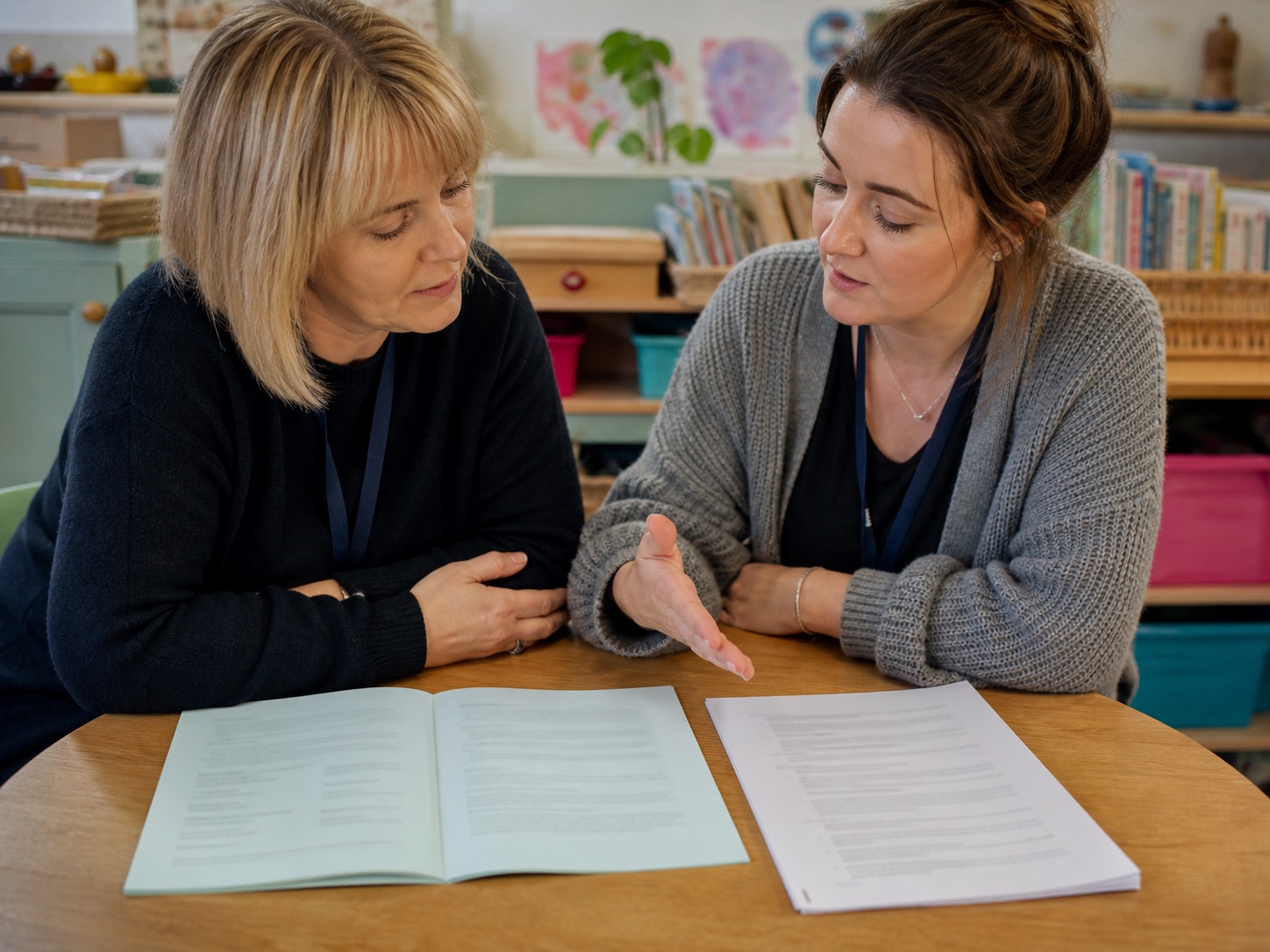
Development Matters is the Department for Education's non-statutory guidance for the Early Years Foundation Stage (EYFS). It is there to help practitioners understand how children learn and develop, and to support the decisions they make every day about what to offer next.
The word that matters most in that sentence is non-statutory. Development Matters is guidance, not law. Understanding that difference is the key to using it well.
Development Matters vs the statutory framework
There are two documents, and they do different jobs:
- The EYFS statutory framework is the law. It sets out the safeguarding and welfare requirements and the learning and development requirements every setting must meet, including the Early Learning Goals assessed at the end of reception.
- Development Matters is one of the guides that helps you meet it. It is not a curriculum to be delivered and it is not a checklist to be ticked off.
You must follow the statutory framework. You may find Development Matters a helpful way to do so — most settings do — but you are free to use other approaches. We cover this in full in Development Matters vs the EYFS statutory framework.
The seven areas of learning
Development Matters is organised around the seven areas of learning, split into three prime areas and four specific areas.
The prime areas come first because they underpin everything else:
- Communication and language
- Personal, social and emotional development
- Physical development
The specific areas grow out of the primes:
- Literacy
- Mathematics
- Understanding the world
- Expressive arts and design
The document itself is organised into three broad, overlapping phases — birth to three, three and four-year-olds, and children in reception — and within each phase, by these seven areas. For what each area actually covers, see the seven areas of learning explained; and for how children learn across all of them, see the Characteristics of Effective Teaching and Learning.
How to use it day to day
Development Matters is most useful as a lens, not a form. Read it to sharpen what you notice — to help you see the learning in an ordinary moment at the water tray — rather than to hunt for evidence against a list.
It also includes observation checkpoints at certain ages. In the document's own words these help you "notice whether a child is at risk of falling behind" — a professional prompt to look more closely and, if needed, start support early, not a pass/fail line.
The one habit worth keeping
Whenever you link a moment to a Development Matters statement, be able to point to what the child actually did that justifies it. A framework link is only worth anything if the evidence is real — which is the same principle whether you are writing observations by hand or with a tool that does it for you.
Development Matters is published by the Department for Education (updated 4 September 2023) under the Open Government Licence v3.0.