Three and four-year-olds: development in the EYFS
How three and four-year-olds typically develop across the seven areas of learning, the Development Matters observation checkpoints, how to support them, and when to seek help.
3 min read
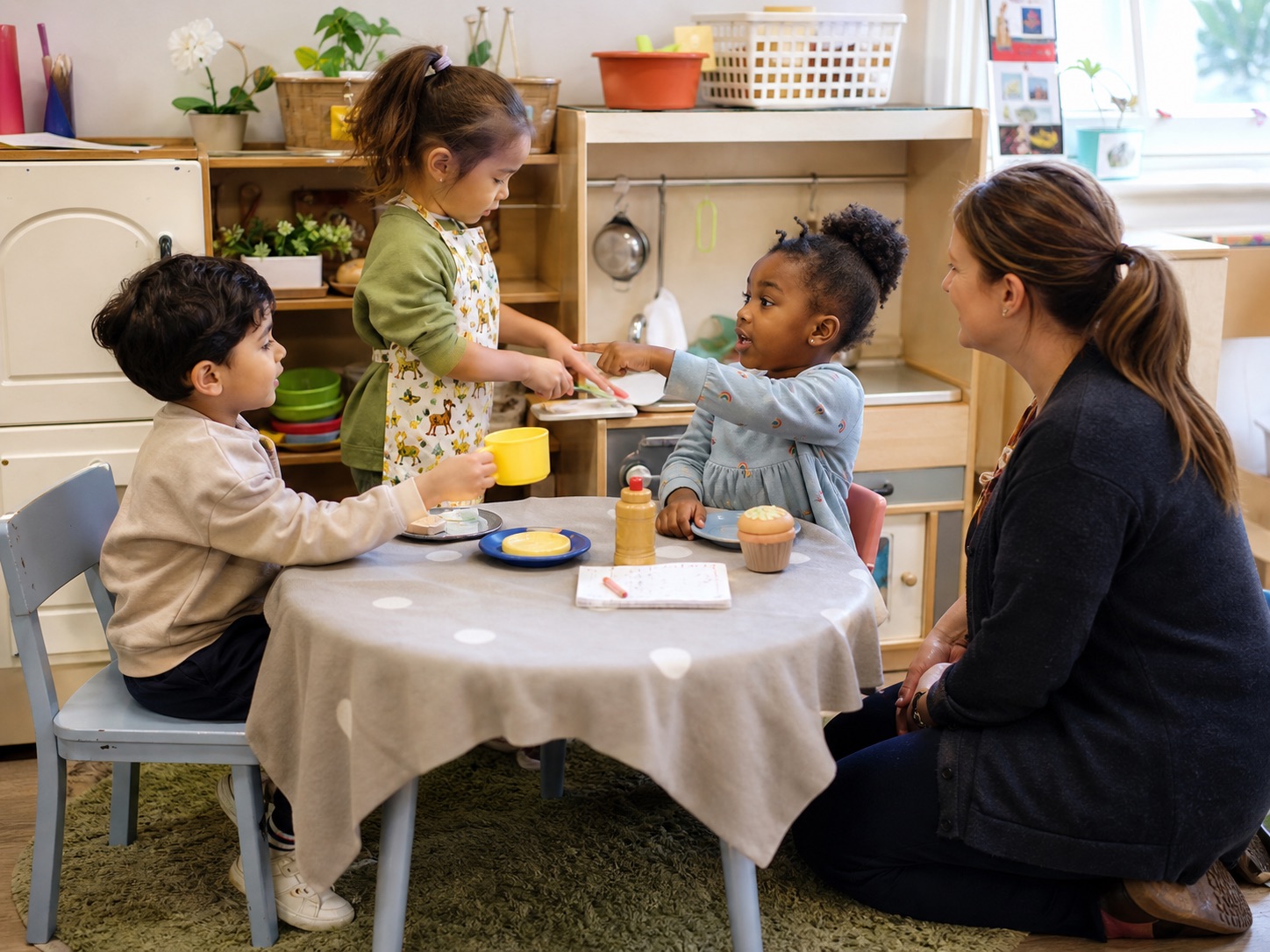
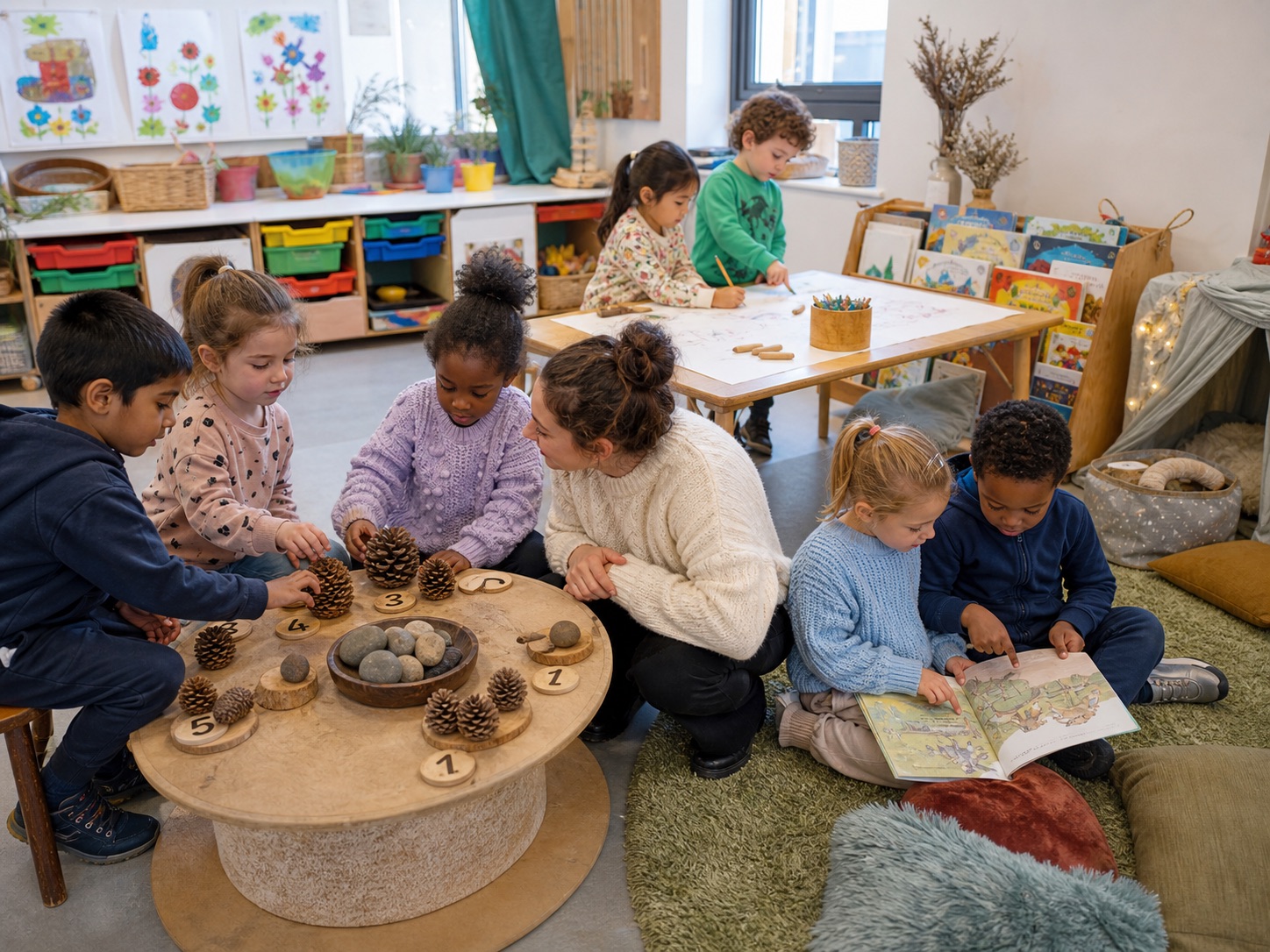
The second Development Matters phase, "3 and 4-year-olds", is where play becomes richly social and imaginative, and where thinking becomes visible in conversation. Children in this phase are increasingly independent, increasingly verbal, and increasingly interested in one another. As ever, the pace varies widely from child to child — the picture below is what is typical, not a target.
Three and four-year-olds at a glance
- Language takes off — longer sentences, storytelling, and endless "why?".
- Play becomes cooperative and imaginative, with real friendships and negotiation.
- Physical skills refine — from running and climbing to using scissors and a pencil.
- The specific areas grow as literacy, mathematics and understanding of the world become more prominent.
The prime areas
Communication and language
Vocabulary expands quickly. Children follow longer, multi-part instructions, ask (and want answers to) "why?" questions, use longer sentence structures, and hold extended conversations — including talking about stories and picking up new words from them. Rich, back-and-forth talk remains the engine of progress.
Personal, social and emotional development
Children choose their own activities with growing independence, form friendships, and begin to resolve conflicts. They start to follow rules because they understand them, manage feelings increasingly through language, and show emerging empathy for how others feel.
Physical development
Gross-motor skills refine — climbing, skipping, hopping, catching and throwing — while fine-motor control develops enough for tools like scissors and, later, a pencil. Hand dominance emerges, and children become far more independent with self-care such as dressing.
The specific areas
The specific areas come to the fore in this phase:
- Literacy: grasping print concepts (that print carries meaning and has direction), developing phonological awareness through rhyme and syllables, and beginning to write their own name and letters.
- Mathematics: counting, comparing quantities, recognising and making patterns, and exploring shape and space in play.
- Understanding the world: growing curiosity about people and communities, living things, and the difference between past and present.
- Expressive arts and design: more sustained imaginative play with roles, and richer exploration of art, music, movement and construction.
Observation checkpoints
Development Matters includes observation checkpoints at around age 3 and around age 4. They prompt you to notice things such as whether a child can, with adult guidance, manage sharing and turn-taking and understand "yours" and "mine", whether they settle to an activity for a while, whether they take on different roles in pretend play, and whether they can "generally negotiate solutions to conflicts in their play."
As always, these are prompts to look more closely where a child might be at risk of falling behind — not a checklist to tick.
How to support development at this age
- Ask open-ended questions and join play to extend thinking (sometimes called sustained shared thinking).
- Provide rich role-play and real problems worth solving together.
- Set up situations with a genuine reason to take turns and negotiate, and be nearby to name it when a child manages it.
- Keep talk language-rich — introduce and explain new words in context.
- Offer plenty of chances to move, climb and use tools to build strength and coordination.
When to seek extra support
Children at this age vary enormously, so lagging a typical point is usually well within normal range. But it is worth seeking advice if a child:
- is very hard to understand, or is not putting words together into short sentences;
- shows little interest in playing or interacting with other children;
- cannot follow a simple two-part instruction;
- appears to lose skills they previously had.
These are reasons to look more closely, not diagnoses. Talk to your setting's SENCO and, with the family, to a health visitor or GP — early support is almost always more effective than waiting.
Where this fits
This is the middle Development Matters phase, between birth to three and children in reception. For the wider picture see our child development overview and what Development Matters is.
This guide is general information, not a diagnostic tool. Quotations are from Development Matters (Department for Education, updated 4 September 2023), Open Government Licence v3.0. For any concern about an individual child, seek advice from a qualified professional.