Types of observation in early years
Narrative, snapshot, learning story, time and event samples — the common ways to observe children, when each is useful, and why you should not try to do all of them.
5 min read
There is no single "correct" way to observe a child, and — worth saying clearly — no legally required format. The EYFS tells you that ongoing assessment is part of effective practice, but it does not dictate how you write it down. Development Matters is blunt about the trap that follows: assessment "is not about lots of data and evidence." The skill is choosing the right kind of observation for the moment, and doing less of it, better.
This guide runs through the approaches most settings use, when each earns its place, and how to choose between them.
Narrative (long) observation
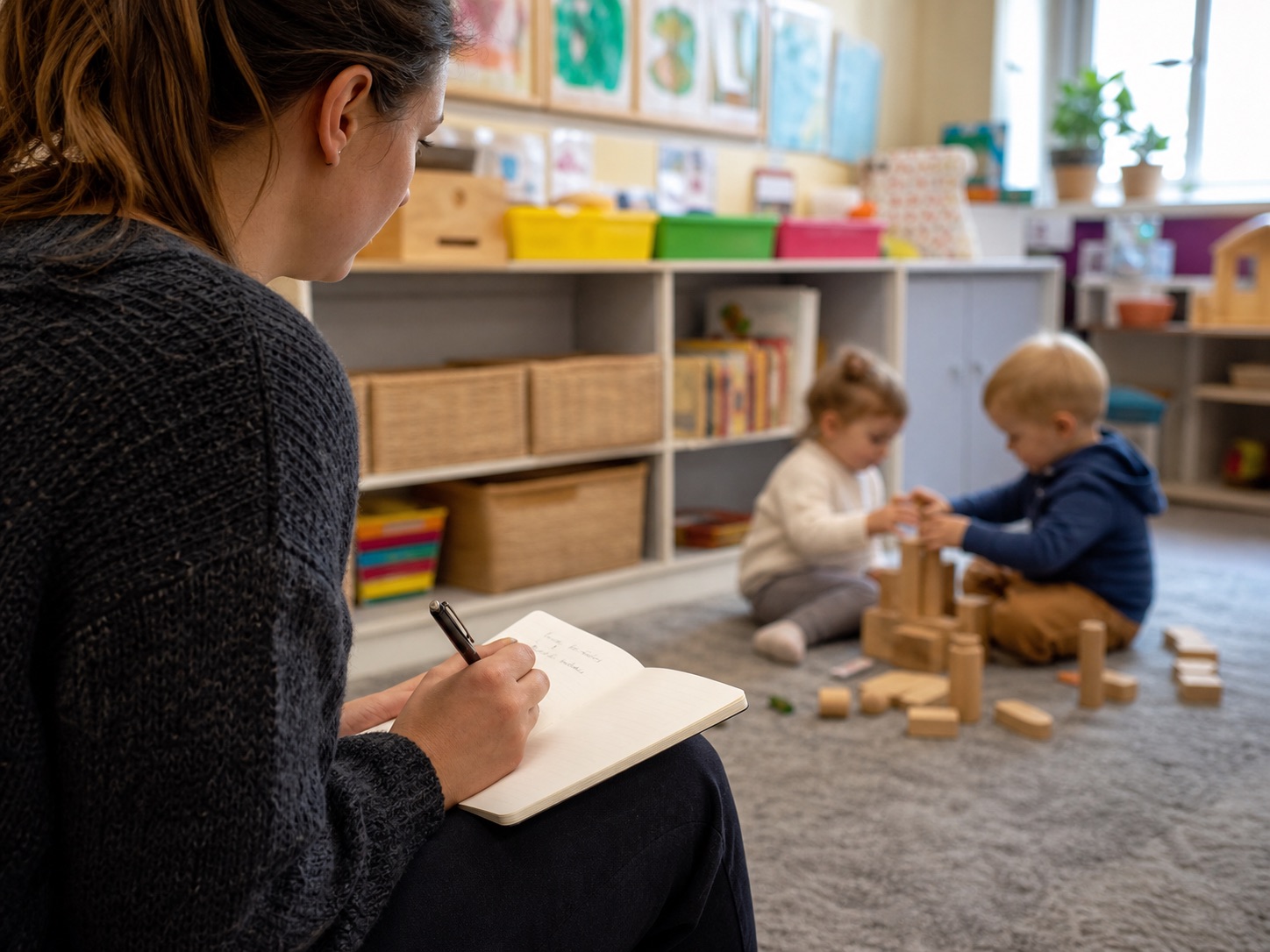
A narrative observation — sometimes called a running record — is a detailed, written-as-it-happens account of a stretch of a child's play. You record what the child does and says, in sequence, over several minutes.
- Useful for: capturing a rich, sustained moment — deep involvement, problem-solving, or a child you want to understand better.
- Watch out for: it is time-hungry and pulls you out of interacting. Keep it for when the depth genuinely justifies stepping back.
Snapshot (short) observation
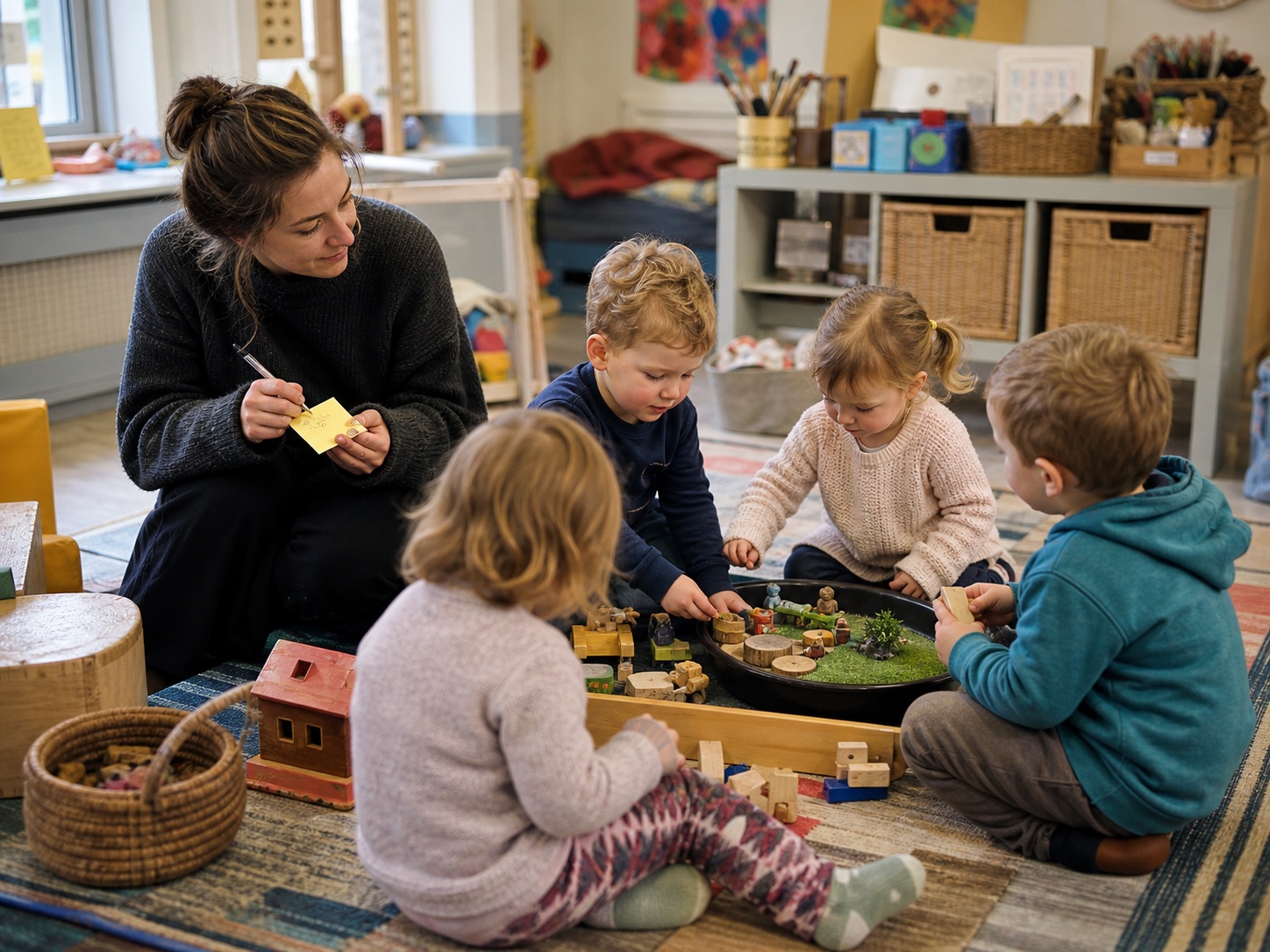
A snapshot is the opposite: a few lines capturing a single significant moment, often jotted on a sticky note and written up later. Most day-to-day observations are, and should be, snapshots.
- Useful for: the "wow" moment, a first, or a small step you do not want to lose. Quick, low-burden, and easy to keep specific.
- Watch out for: without enough detail a snapshot becomes vague ("enjoyed the sand"). A good one still records a real action or the child's own words.
Learning story
A learning story is a narrative written to or about the child, telling the story of a piece of learning — often with photos — in warm, personal language. It is designed to be shared with the child and their family.
- Useful for: celebrating and making learning visible to parents; building the home–setting relationship.
- Watch out for: the storytelling can drift into description for its own sake. The learning should still be clear underneath the narrative.
Photo and video observation
A photograph or short video can capture something words struggle to — a physical skill, a fleeting expression, a sequence of actions.
- Useful for: movement, construction, expressive arts; evidence a still description would flatten.
- Watch out for: consent and data protection. Images of children are personal data — follow your setting's policy on permissions, storage and what may leave the building. And an image is not an observation on its own: it still needs a line saying what it shows.
Time sample
A time sample records what a child is doing at set intervals — say, every ten minutes across a session — rather than following one continuous moment.
- Useful for: understanding patterns: which areas a child gravitates to, how long they sustain attention, when they are most settled.
- Watch out for: it tells you what and when, but little about why. Use it to raise questions, then observe more closely to answer them.
Event sample
An event sample records every occurrence of a specific, defined behaviour — what happened just before, and just after — over a period.
- Useful for: understanding a particular pattern, often a behaviour that is puzzling a team, so you can see its triggers and respond thoughtfully.
- Watch out for: it narrows your focus deliberately, so it is a tool for a specific question, not everyday use.
Planned vs spontaneous
Cutting across all of the above is a simple distinction:
- Spontaneous observation is you noticing something worth capturing as it happens — the bulk of good practice.
- Planned (or focused) observation is deciding in advance to watch a particular child or area, usually because you have a question you want to answer.
Most of what you record will be spontaneous. A planned observation is what you reach for when a child's development is less clear and you want a closer look.
A note on tracking
Tracking documents — grids that plot children against development bands — are a different thing from an observation, and they are where settings most easily tip into the "lots of data" Development Matters warns against. The guidance is explicit that its statements are "not designed to be used as a tick list for generating lots of data." If a tracking system is generating work without changing what you actually do for children, that is a signal to simplify.
How to choose — and how much to do
The point is not to master every format, still less to use them all. A few principles:
- Fit the method to the question. A snapshot for a lovely moment; a narrative when you want depth; a time or event sample when you have a specific pattern to understand.
- Default to the lightest tool that does the job. Most days, that is a snapshot.
- Do less, better. Development Matters is clear that assessment should not take practitioners away from the children for long periods. Fewer, sharper observations beat a pile of thin ones.
Whatever type you choose, the qualities that make an observation good are the same — specific, honest, and useful. Our guides on how to write an observation and good vs weak observations cover those, and writing meaningful next steps picks up what to do with what you have noticed.
Quotations are from Development Matters (Department for Education, updated 4 September 2023), Open Government Licence v3.0.