The Characteristics of Effective Teaching and Learning explained
The three characteristics that describe HOW children learn — playing and exploring, active learning, and creating and thinking critically — with what each looks like in practice and how to support it.
4 min read
Most discussion of the early years focuses on what children learn — the seven areas of learning. But the EYFS is just as concerned with how they learn, and that is the job of the Characteristics of Effective Teaching and Learning.
They are easy to overlook because they are not a curriculum area with statements to track. But they run through everything a child does, at every age, in every area — and a child's disposition to learn matters at least as much as any single skill. This guide explains the three characteristics, what each looks like in practice, and how to support them.
The three characteristics
Development Matters describes three characteristics:
- Playing and exploring — children "investigate and experience things, and 'have a go'".
- Active learning — children "concentrate and keep on trying if they encounter difficulties, and enjoy achievements".
- Creating and thinking critically — children "have and develop their own ideas, make links between ideas, and develop strategies for doing things".
Read them again and notice what they describe: not knowledge, but engagement, motivation, and thinking. A curious, persistent, resourceful child is developing something that will serve them long after any particular fact is forgotten.
Playing and exploring — engagement
This is the willingness to get stuck in — to find something interesting, to have a go, and to take a sensible risk without a fear of getting it wrong.
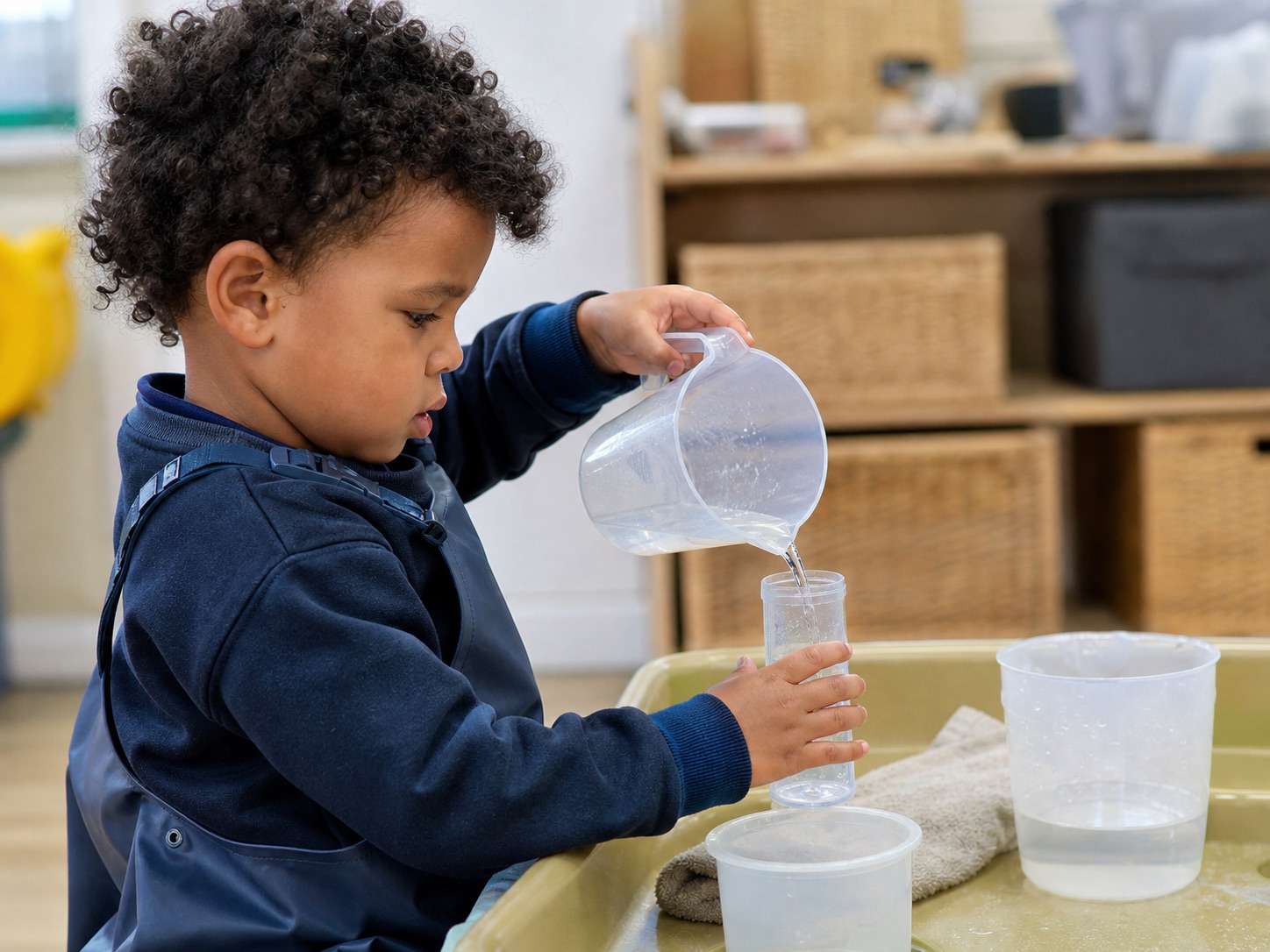
What it looks like: a child choosing their own play, investigating how something works, using what they know in a new situation, or "having a go" at something unfamiliar rather than waiting to be shown.
How to support it: offer genuine choice and open-ended resources; give children time and space rather than over-directing; and treat mistakes as part of learning, so a child is not afraid to try. Over-structured activities with one "right" outcome quietly teach the opposite.
Active learning — motivation
This is what keeps a child going: concentration, persistence in the face of difficulty, and the satisfaction of achieving something for its own sake.
What it looks like: a child becoming deeply involved and maintaining focus, keeping trying when something is hard, and showing pride in what they have done — often more interested in the doing than in any reward.
How to support it: protect long, uninterrupted stretches of time so deep involvement can build; notice and value effort and strategy, not just the result; and let the sense of achievement come from the child rather than from your praise alone. Constant interruption and a rush to the next activity are the enemies of active learning.
Creating and thinking critically — thinking
This is the thinking itself: having ideas, making links between them, and working out how to do things.
What it looks like: a child making a plan, predicting what might happen, noticing patterns and connections, testing an idea and changing it when it does not work, or solving a problem in their own way.
How to support it: ask open, genuine questions ("I wonder what would happen if…") and then wait; join play to extend thinking rather than take it over — what is often called sustained shared thinking; and give children real problems worth solving. The aim is to make a child's thinking visible, to them and to you.
They run through everything
The characteristics are not a fourth thing to timetable alongside play. They are how the learning happens, whatever the activity and whatever the age — a baby exploring a treasure basket and a reception child planning a model are both showing them. Because of that, they are also part of the EYFS statutory framework, not only the guidance.
Noticing them in your observations
Because the characteristics describe disposition rather than a fixed skill, they are best captured in the moment. When you write an observation, it is often the how that is most worth recording: not just that a child built a tower, but that they tried three times, changed their approach, and kept going. That is active learning and critical thinking made visible — and it is exactly the kind of detail a strong observation preserves.
For more on capturing that well, see our guides on how to write an observation and what makes a good one. For how the characteristics sit within the wider framework, see what Development Matters is and the seven areas of learning.
Quotations are from Development Matters (Department for Education, updated 4 September 2023), Open Government Licence v3.0.